<?xml version="1.0" encoding="UTF-8"?>
<feed xmlns="http://www.w3.org/2005/Atom" xml:lang="en-gb">
<link rel="self" type="application/atom+xml" href="http://forum.robosavvy.com/feed.php?f=3&amp;t=7246" />

<title>RoboSavvy Forum</title>
<subtitle>Robosavvy Forum: The largest online community of Humanoid Robot Builders</subtitle>
<link href="http://forum.robosavvy.com/index.php" />
<updated>2011-06-04T08:17:18+01:00</updated>

<author><name><![CDATA[RoboSavvy Forum]]></name></author>
<id>http://forum.robosavvy.com/feed.php?f=3&amp;t=7246</id>
<entry>
<author><name><![CDATA[Antonelli]]></name></author>
<updated>2011-06-04T08:17:18+01:00</updated>
<published>2011-06-04T08:17:18+01:00</published>
<id>http://forum.robosavvy.com/viewtopic.php?t=7246&amp;p=31438#p31438</id>
<link href="http://forum.robosavvy.com/viewtopic.php?t=7246&amp;p=31438#p31438"/>
<title type="html"><![CDATA[Re: PCBMotor - 2.6 million steps per revolution]]></title>

<content type="html" xml:base="http://forum.robosavvy.com/viewtopic.php?t=7246&amp;p=31438#p31438"><![CDATA[
Hi all,<br /><br />this is my first post here. I normally check your forum because I have a general interest in robotics, I will build one if I will find the time <img src="http://forum.robosavvy.com/images/smilies/icon_smile.gif" alt=":-)" title="Smile" />.<br /><br />However, I also came across the PCBMotor adwords campaign, they are almost a static content at  <a href="http://hackaday.com/" class="postlink">Hack a Day</a> and I found it interesting.<br />I think that the torque is too small to replace servo boxes, but maybe for mini robots or stacking a number of them, they can be very thin.<br /><br />Another application is to use them, instead of stepper motor, into a 3D printer like the Thing o Matic. They seems to a have better resolution and no backlash.<br /><br />Another thing that is interesting is that probably the same technique can be used to create linear actuators <span style="font-weight: bold">simply</span> positioning the stators along a line.<p>Statistics: Posted by <a href="http://forum.robosavvy.com/memberlist.php?mode=viewprofile&amp;u=2762">Antonelli</a> — Sat Jun 04, 2011 8:17 am</p><hr />
]]></content>
</entry>
<entry>
<author><name><![CDATA[limor]]></name></author>
<updated>2011-06-02T22:33:22+01:00</updated>
<published>2011-06-02T22:33:22+01:00</published>
<id>http://forum.robosavvy.com/viewtopic.php?t=7246&amp;p=31432#p31432</id>
<link href="http://forum.robosavvy.com/viewtopic.php?t=7246&amp;p=31432#p31432"/>
<title type="html"><![CDATA[PCBMotor - 2.6 million steps per revolution]]></title>

<content type="html" xml:base="http://forum.robosavvy.com/viewtopic.php?t=7246&amp;p=31432#p31432"><![CDATA[
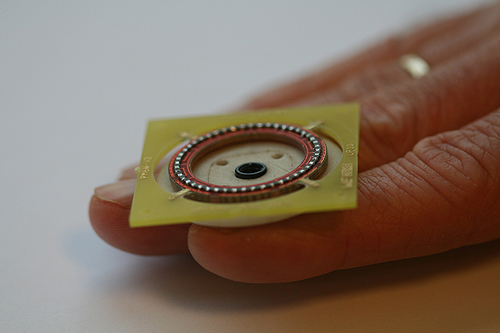
Just came across their adwords campaign. Can this replace servo boxes for hobby robotics applications ?<br /><br /><img src="http://pcbmotor.com/images/basicstator.gif" alt="Image" /><br /><img src="http://www.designworldonline.com/uploads/ImageGallery/pcb4.jpg" alt="Image" /><br /><br /><blockquote class="uncited"><div><br />Danish technology company, PCBMotor ApS, says it recently set a new performance record in printed circuit board (PCB) motors. In an experiment using its latest controller prototype, the company applied short micro-pulses (µpulses) to drive the motor and achieved a record 2.6 million equivalent steps per revolution.<br /><br />“We’ve known for some time that PCBMotors are capable of realizing very high resolutions. And now we’ve proven it,” says Henrik Stæhr-Olsen, CEO of PCBMotor. “The driver sets the limit for what can be achieved and we can now show that resolutions over 2.5 Million µpulses per revolution are possible.”<br /><br />The recently conducted experiment consisted of 20 100 µpulse bursts, initiated manually via a USB connection to the motor controller, which resulted in the movement of a pointer, with a needle attached, against a linear code strip mounted on a ruler.<br /><br />“The resulting 2000 µpulses moved the needle seven ruler-lines, which equates to 2 850 000 µpulses per revolution,” explains Stæhr-Olsen, referring to a video of the experiment that documents the results.<br /><br />The prototype controller, built for the experiment, is powered from the USB port and handles a range of settings for the motor such as pulse length and interval, drive voltage, and the number of µpulses and digital steps. Operating in open-loop mode, it also has on-board memory (EEPROM) for storing the drive settings.<br /><br />When in position, the PCBMotor and driver can be completely powered down, removing all mechanical and electrical interference (noise).<br /><br />“The experiment shows that the inherent holding torque of the motor is sufficient to stop and hold its position when the power is turned off&#8213;unlike a stepper motor. And this is very important for high-precision applications sensitive to even the smallest movement or vibration,” says Stæhr-Olsen.<br /><br />The available holding torque depends on the size of the motor and is typically 35 Nmm for a standard 30 mm motor.<br /><br />PCBMotor’s technology integrates accurate motors and the motor controller directly onto a printed circuit board.<br /><br />For more information, visit PCBMotor.<br /></div></blockquote><p>Statistics: Posted by <a href="http://forum.robosavvy.com/memberlist.php?mode=viewprofile&amp;u=2">limor</a> — Thu Jun 02, 2011 10:33 pm</p><hr />
]]></content>
</entry>
</feed>